YOUR ENERGIE SOLUTIONS EURL YES
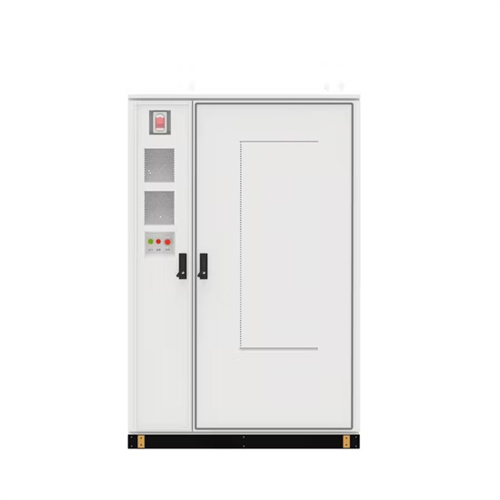
Energie speicher Eritrea
Eritrea is developing building its capacity from such sources as wind and solar. Development of sources helps give the country access to reliable energy and lower greenhouse gas emissions. The government of Eritrea built a wind energy pilot project in the city of Assab in the Southern Red Sea region in 2010 with the help of the . The wind. [pdf]FAQS about Energie speicher Eritrea
Where can I find information about energy in Eritrea?
You can find information on energy production, total primary energy supply, electricity consumption, and CO2 emissions for Eritrea on the IEA homepage. For data on energy access (access to electricity, access to clean cooking, renewable energy, and energy efficiency) in Eritrea, visit the Tracking SDG7 homepage.
What is Eritrea's energy policy?
The main sector policy is the Energy Policy 2009 (Table 5). Most of Eritrea’s energy is generated from thermal yet the country has plenty of renewable energy potential. The Energy Policy aims to increase the use of renewables in its energy mix so as to reduce dependency on fossil fuels and lower greenhouse gas emissions.
How much electricity does Eritrea use?
Eritrea’s population was 6.33 million in 2013 (Table 1) (IEA, 2016). Table 2 shows that total production of electricity was 38 ktoe in 2015 with 97.3 per cent generated from fossil fuels. Final consumption of electricity is 33 ktoe with 9 per cent of this consumed in industry (AFREC, 2015).
Who regulates electricity in Eritrea?
The functions of a regulator are currently undertaken by the Department of Energy. The Eritrean Electricity Corporation (EEC) is the sole generator, transmitter and distributor of electric energy. Eritrea is a member country of the East African Power Pool, but currently participates very little.
Can solar energy be used in Eritrea?
Solar energy is currently being used mainly in public buildings. However, there is the potential to extend this use to crop driers, refrigeration, water heating and tobacco curing, among others. Average insolation is between 5.0 and 6.55 kWh/ m2/day (REEEP, undated). Eritrea does not have oil resources, although oil exploration has taken place.
What are the different types of energy transformation in Eritrea?
One of the most important types of transformation for the energy system is the refining of crude oil into oil products, such as the fuels that power automobiles, ships and planes. No data for Eritrea for 2022. Another important form of transformation is the generation of electricity.

Venezuela national energy solutions
Venezuela has pushed the creation of , the Andean region (Petroandino), and South America (Petrosur), and Latin America (Petroamerica). The initiatives include assistance for oil developments, investments in refining capacity, and preferential oil pricing. The most developed of these three is the Petrocaribe initiative, with 13 nations signed agreement in 2005. Under Petrocaribe, Venezuela would offer crude oil and petr. [pdf]FAQS about Venezuela national energy solutions
What type of energy does Venezuela use?
Venezuela relies heavily on domestic production of fossil fuels, with oil and natural gas comprising approximately 90% of the country's total energy supply. Hydro power also plays a key role in electricity generation, accounting for roughly half of installed capacity.
Will Venezuela suffer a deterioration of its power in international affairs?
Venezuela may suffer a deterioration of its power in international affairs if the global transition to renewable energy is completed. It is ranked 151 out of 156 countries in the index of Geopolitical Gains and Losses after energy transition (GeGaLo).
How is natural gas used in Venezuela?
Venezuela's natural gas reserves are still underutilized, and a large portion of the country's current natural gas output is used to supplement the output of mature oil fields rather than sold to generate revenue.24 A portion of this natural gas (about 30%) is reinjected into oil fields to increase crude oil production.
Why is Venezuela struggling with oil & natural gas development?
Furthermore, budgetary constraints at Venezuela's state oil company PDVSA and a lack of qualified technical personnel and foreign direct investment have all hampered Venezuela’s oil and natural gas development. PDVSA is the largest source of revenue for the Venezuelan government.
How much natural gas does Venezuela produce a day?
In 2018, Venezuela produced 2.6 billion cubic feet per day (Bcf/d) of natural gas and consumed 2.4 Bcf/d of natural gas. Historically, 90% of the country’s natural gas production has been associated with oil (mostly in eastern Venezuela). As oil production has declined, natural gas production has also declined.
What is the main source of revenue for the Venezuelan government?
PDVSA is the largest source of revenue for the Venezuelan government. When Venezuela nationalized its oil industry in the 1970s, PDVSA was formed. The government gave the company significant autonomy until the 1990s, when it took direct control of PDVSA.

Caterpillar energy solutions s a Liechtenstein
Caterpillar Energy Solutions GmbH, is a mechanical engineering company based in , , . It was known as MWM GmbH Motoren-Werke Mannheim (MWM) until November 2013. In 2009 the company was the third-largest producer by revenue of gas and diesel engines. The main focus of production is gas engines and gensets for the generation o. [pdf]FAQS about Caterpillar energy solutions s a Liechtenstein
Who is Caterpillar Energy Solutions?
As part of the Caterpillar Inc., Caterpillar Energy Solutions today has a leading position in the field of highly efficient, ecologically advanced distributed energy solutions. Thus, the company serves its customers around the globe as a reliable partner for proven and sustained added value in the implementation of power plant projects.
What is the Caterpillar Energy Solutions service portal?
The Caterpillar Energy Solutions service portal is available to our customers around the clock to deliver customized support and ensure rapid spare parts supply. We thus guarantee tailored solutions, reduced downtimes and, as a result, superior profitability of the plant.
Is Caterpillar Energy Solutions ISO 9001 certified?
All Caterpillar Energy Solutions locations are certified according to ISO 9001:2015. For us, the implementation of relevant directives is not merely something that is “nice to have”, but an essential requirement of our customers.
Does caterpillar have a cyber security policy?
With its Cyber Security measures for Digital Solutions, Caterpillar Energy Solutions provides plant operators with secure remote monitoring of and remote access to their cogeneration power plant. At the same time, they are protected against unauthorized digital access and hacker attacks.
What is mwmenergy – Caterpillar Energy Solutions?
At the same time, they are protected against unauthorized digital access and hacker attacks. With its newly launched website mwmenergy.lat, Caterpillar Energy Solutions offers customers a target group-specific offering for the Latin American energy market under the MWM brand.
Why should you choose Caterpillar Energy Solutions?
Our consistent quality management guarantees products with lasting high levels of efficiency and ease of operation, in adherence with the highest environmental standards. The Caterpillar Energy Solutions service portal is available to our customers around the clock to deliver customized support and ensure rapid spare parts supply.